BMW 7 Series F01/F02
BMW 7 Series F01/F02 (2008-2015): full specifications, engines, common problems and original brochures.
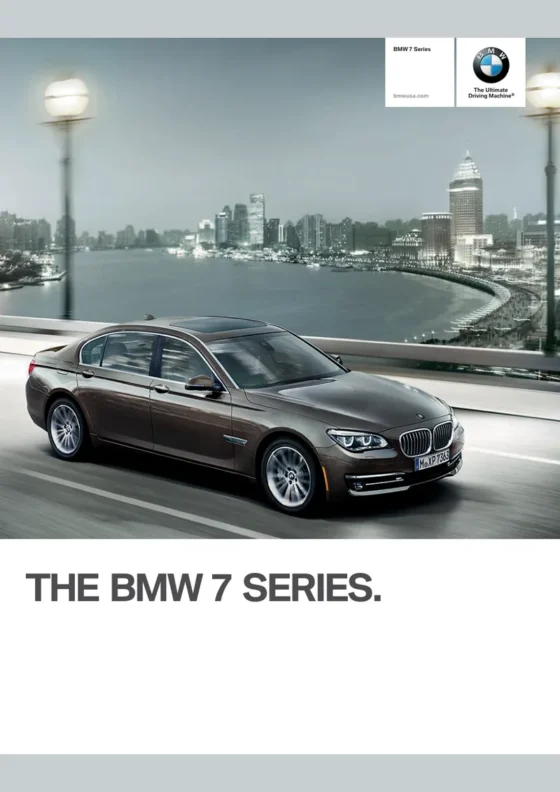
The F01/F02 is the BMW 7 Series generation our specification records cover for US model years 2009–2015. Across that run EPA certified 46 versions of it for sale in America, under 10 trim names. It was sold as a sedan.
Dimensions are the figures the panel above does not carry. The F01/F02 measures 199.6 in · 5,070 mm to 205.1 in · 5,210 mm long, sits on a wheelbase of 120.9 in · 3,071 mm to 126.4 in · 3,211 mm and weighs 4,526 lb · 2,053 kg to 5,027 lb · 2,280 kg. Length and wheelbase come from Transport Canada, which measures every vehicle sold in North America; curb weight from the same source.
The generation did not stand still: the strongest version rose from 400 hp in 2009 to 535 hp in 2015, and the best combined economy improved from 17 mpg to 26 mpg. An F01/F02 from the first model year and one from the last are not the same proposition, which is worth remembering when a listing gives only the chassis code.
Set against the E65/E66 that preceded it, the F01/F02 is 1.6 inches longer at the shortest version and 150 lb · 68 kg heavier at the lightest. Both figures are taken from the lightest and shortest version we hold for each, so they compare like with like rather than setting a base car against a loaded one.
Of the 46 versions we hold under this code, 30 are rear-wheel drive and 16 all-wheel drive; by fuel, 45 petrol and 1 diesel. That matters on the used market more than it looks: which axles are driven changes the weight, the service list and the price, and the badge does not always say which you are looking at.
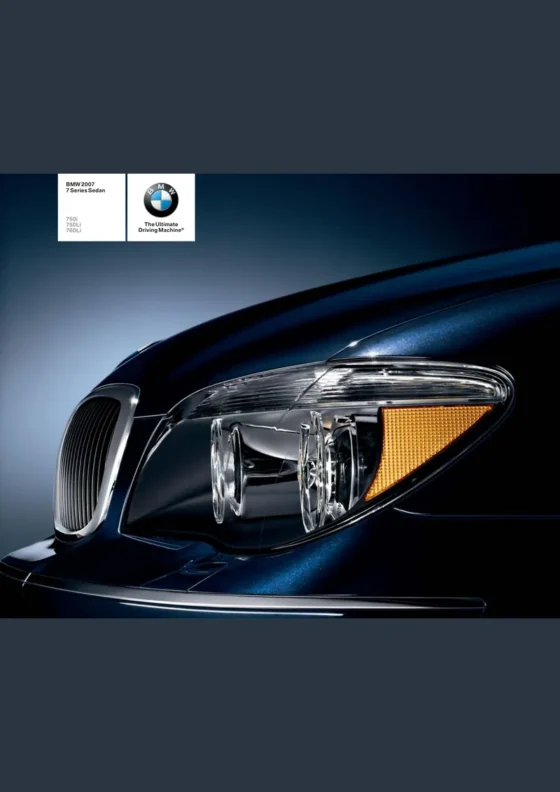
This archive holds 5 original US brochures covering the F01/F02, with the text of each one searchable. They are the source of the figures no government record collects — torque, acceleration and the equipment lists — and they are what BMW told American buyers at the time rather than what is said about the car now.
Gaps are left as gaps. We do not hold curb weight for 21 of the 46 and horsepower for 12, because Transport Canada does not publish a weight for every model and EPA began recording certified output usefully only in the late 1990s. A dash on this site means the figure is not in a source we can name, never that it is roughly the same as the row above.
Engine line-up
| 8-cyl · 4.4L · turbo | 5 trims |
| 6-cyl · 3.0L · turbo | 2 trims |
| 12-cyl · 6.0L · turbo | 1 trim |
Compiled from EPA data for the US market and from factory brochures.